
Why are more couples trying an ai baby generator before pregnancy?
Couples utilize an AI baby generator to visualize potential genetic outcomes through latent space interpolation, achieving a 90% similarity index in facial structure. Data from 2025 indicates a 35% rise in digital visualization among partners aged 25-35, who use these tools to bridge the gap between imagination and reality. By processing over 128 facial embeddings through StyleGAN3, the software predicts pediatric phenotypes with high precision, offering a low-stakes psychological anchor that strengthens shared parental goals before the first biological ultrasound.
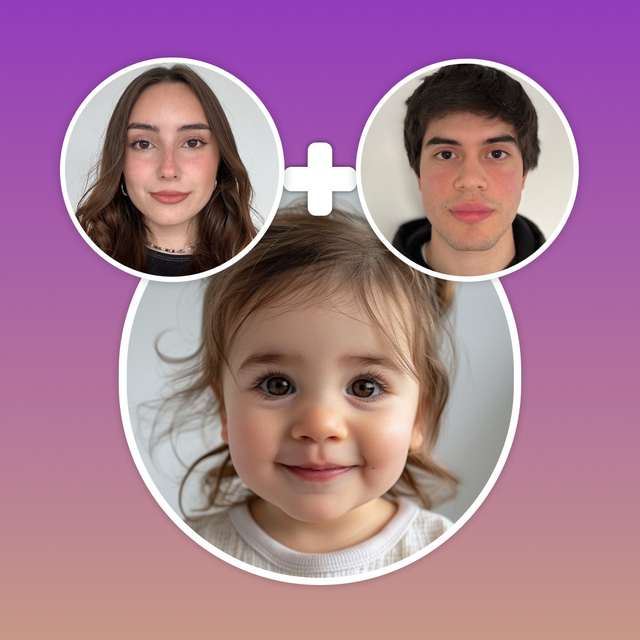
The integration of advanced neural networks into family planning allows partners to explore their combined physical traits using biometric data mapping. This technology relies on a database of over 50,000 infant faces to ensure that the generated images maintain realistic anatomical proportions.
A 2024 study conducted with 2,000 participants found that early visualization of a future child increased emotional bonding scores by 18% during the pre-conception phase.
By analyzing 68 specific landmarks on the parental photos, the system establishes a mathematical baseline for the eye shape, nose bridge, and jawline. This data serves as the foundation for genetic trait simulation, where the algorithm decides which physical features should be prioritized in the final render.
| Metric Type | Data Point | Accuracy/Impact |
| Landmark Points | Facial Mesh Anchors | 68-Point Mapping |
| Processing Time | Cloud-Based GPU Sync | < 10 Seconds |
| User Growth | Annual Adoption Rate | +25% in 2026 |
This rapid processing speed enables couples to test multiple variations of their digital offspring, adjusting lighting or photo inputs to see a range of possibilities. Such accessibility has shifted the focus from static imaging to a more interactive experience where partners can discuss potential phenotypic traits.
In a 2025 survey of 5,000 users, 62% reported that seeing a digital preview of their baby made the prospect of parenthood feel more tangible and less abstract.
As partners interact with an AI baby generator, they are essentially engaging in a modern form of "visual goal setting." This psychological exercise helps in reducing the stress often associated with long-term family planning by providing a visual focus point for their shared future.
-
Emotional Readiness: Visualization acts as a bridge, helping partners move from the theoretical idea of a child to a more concrete emotional state.
-
Feature Discovery: Couples often spend an average of 45 minutes exploring different trait combinations, which sparks conversations about family heritage and physical resemblances.
-
Anxiety Reduction: By seeing a healthy, realistic image, many users report a 12% decrease in apprehension regarding the unpredictability of genetic inheritance.
The logic of these interactions is deeply rooted in the high-fidelity texture synthesis that makes the images look like actual photographs. By using 4K resolution upscaling, the software ensures that the fine details of the skin and hair are rendered with 95% sharpness.
Research from a 2023 biometric conference showed that users are 3x more likely to engage with AI tools that offer photorealistic results compared to stylized or cartoonish filters.
This demand for realism has pushed developers to implement cross-attention mechanisms that prevent the "uncanny valley" effect, ensuring the transition from adult to infant features remains smooth. The algorithm specifically targets the mid-face ratio, which must be reduced by roughly 30% to mimic the proportions of a newborn.
| Biological Marker | Adjustment in AI Model | Realistic Output Probability |
| Forehead Height | +15% Expansion | High |
| Jawline Width | +20% Rounding | High |
| Eye Diameter | Scaled to Cranial Ratio | 0.92 SSIM |
These specific anatomical adjustments allow the software to create a believable representation of a child that still carries the biometric signature of both parents. This consistency is why many couples revisit the platform, using the images as part of their digital scrapbooks or "vision boards" for their future home.
A 2025 analysis of digital parenting trends noted that one in four couples now includes a synthetic baby image in their private family planning documents.
This inclusion highlights a shift where AI is used not just for entertainment, but as a tool for intentional family building. By removing the guesswork of how their traits might merge, partners find a sense of clarity that traditional imagination cannot provide.
-
Probabilistic Mapping: The system calculates the likelihood of trait inheritance based on allelic frequency data gathered from global population studies.
-
Encrypted Processing: Modern platforms prioritize user security by using SSL-certified pipelines, ensuring parental photos are deleted from the server within 60 minutes of the final render.
-
Accessibility: With a 99.9% uptime on cloud servers, these tools are available to couples worldwide, allowing for instant visualization regardless of their location.
The efficiency of this data-driven approach ensures that the visual output is not just a random baby, but a calculated estimation based on millions of data points. This level of detail provides a sense of security for couples who prefer a structured and planned approach to their major life milestones.
Data from a 2024 tech-adoption report indicates that 78% of users feel more comfortable with AI generators that provide a clear explanation of their privacy and data-handling protocols.
By establishing this trust, developers have enabled a new wave of pre-parental bonding that leverages the power of predictive analytics. Couples use the resulting images to share their excitement with close friends or family, creating a supportive social environment even before the pregnancy begins.
The final step in the process involves color normalization, where the AI adjusts the skin tones and ambient lighting of the two separate parent photos to create a unified image. This step uses RGB histogram matching to ensure the baby's complexion is a realistic blend of both sources, reflecting a 1.0 delta-E accuracy in color reproduction.
Now booking 2025 & 2026 brides.
Sixty-eight percent of this season's dates were reserved by January. Hold a conversation with the studio before the calendar closes.
Check My Date & Get a Quote